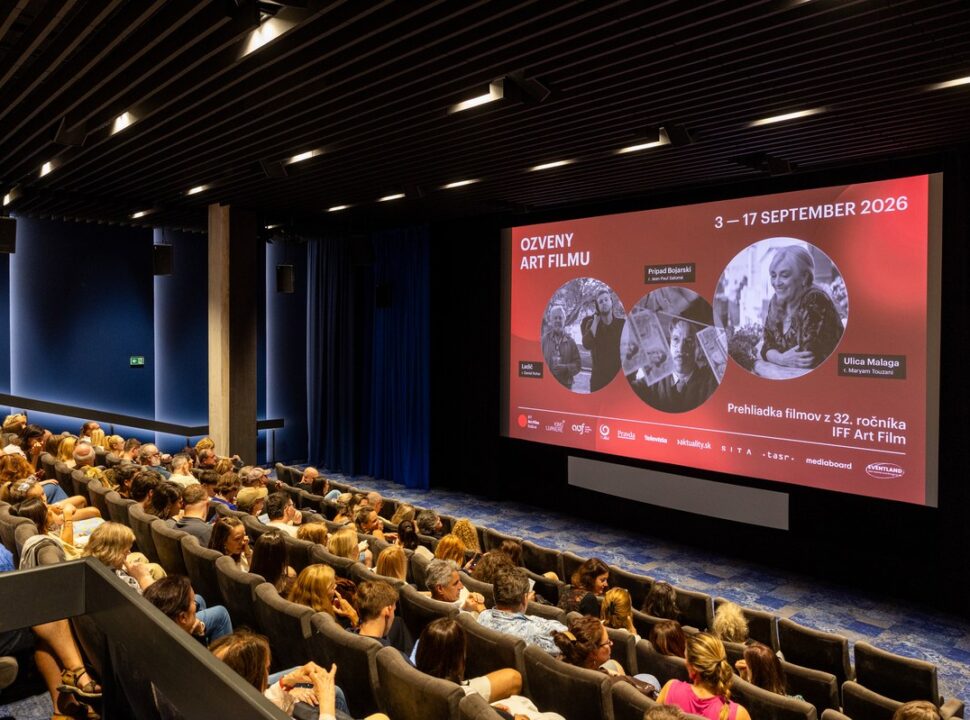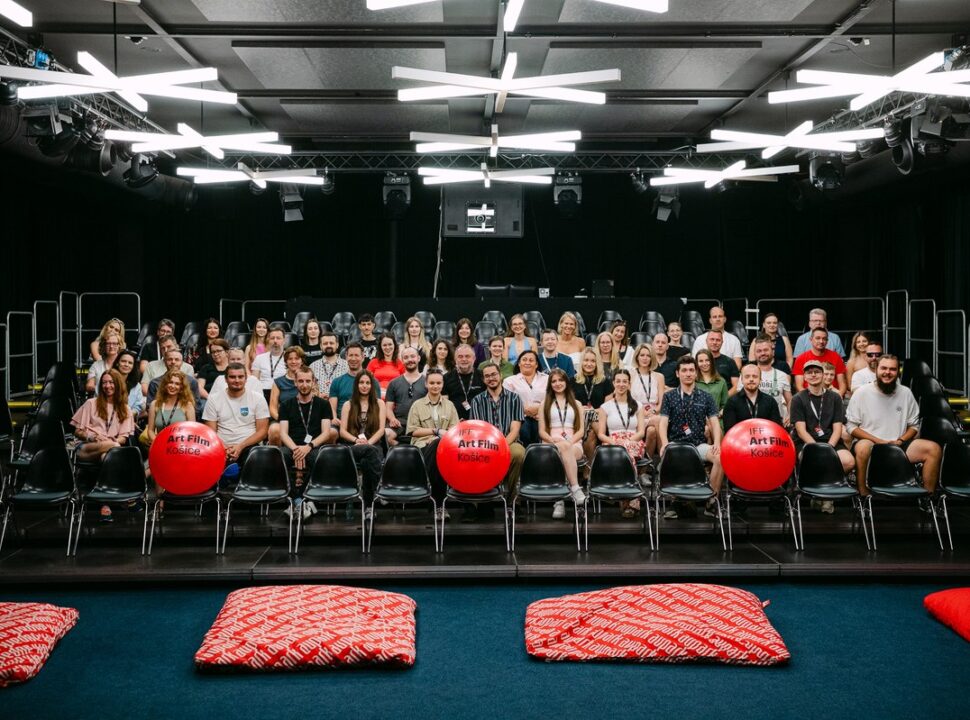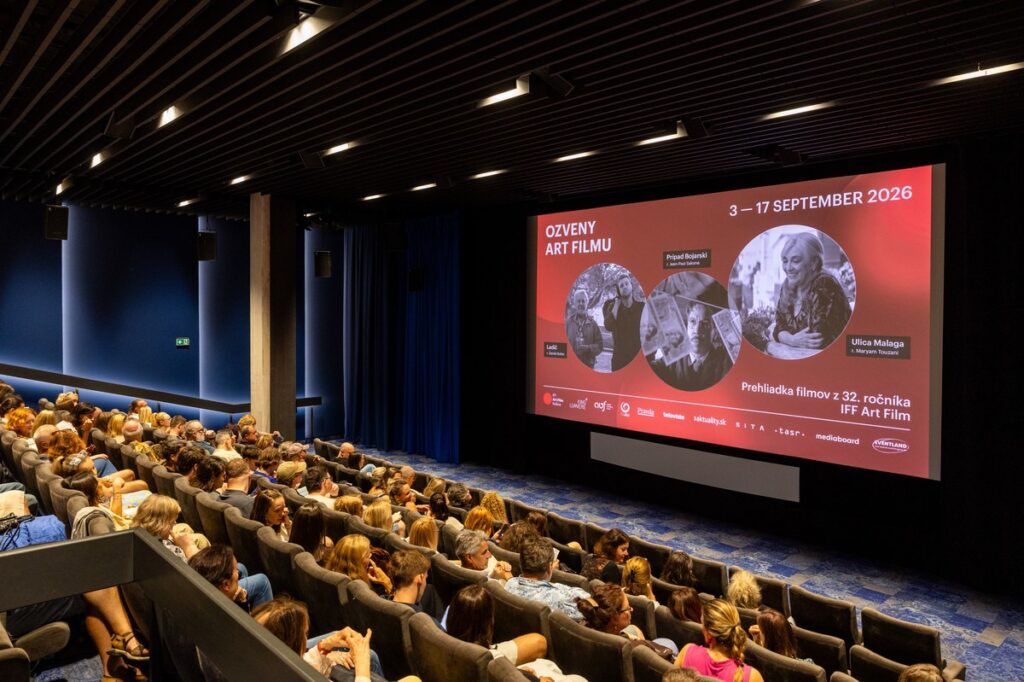


On Sunday, 21 June 2026 at 19.00, the Polish feature film Altar Boys (original title Ministranci) had its festival screening at Kulturpark JOJ Cinema as part of the International Competition of Films from Central and Eastern Europe. The 110-minute drama about a group of boys from a poor rural community who try to make their surroundings keep the Ten Commandments was presented at IFF Art Film in person by its director Piotr Domalewski. The introduction and the discussion were moderated by the festival team, and the hall of Kulturpark JOJ Cinema was sold out for the premiere screening. The film is competing for the Blue Angel award, and audiences who did not make it to the Sunday screening will be able to see it on Wednesday, 24 June at 17.00 at Kino Veritas.
For director Piotr Domalewski, the film is essentially about an attempt to change the world — but you have to name that world precisely. “It’s a film about a group of young people who want to change the world. We have to be precise about describing their world: a poor neighbourhood in the countryside of Poland, a small community really connected with the church, because the church is the centre of culture and actually all matters of living there. The young altar boys want to change their community by checking whether they are trying to fulfill the Ten Commandments or not. If they do, they are awarded; if they don’t, they are punished. They are like modern Avengers. A poor version of the Avengers. That’s what the film is about,” said Domalewski.
The film grows from the personal experience of the director, who himself comes from a conservative Catholic family. “My perspective is pretty honest, because I grew up in this kind of neighbourhood. I come from a conservative Catholic family and I was an altar boy for twelve years. So it’s not that I am devoted to the organisation — because I call the Catholic Church an organisation, since it has nothing to do with the faith. You have to separate those two factors: first is administration and organisation, which the Church basically is, and the second thing is faith. I am not trying in any way to blame faith — it’s all about the organisation,” he stressed. He considers the rebellion against taboo a natural part of filmmaking. “The Church is the kind of organisation that is really afraid of conversation on any level. There always have to be some people who will be against even touching this subject — but there are a lot of supporters as well. If you try to make a film that everyone loves, it has to be bad. There always has to be someone who is against it, and that’s basically what filmmaking is about for me,” he added.
The choice of child protagonists was crucial for Domalewski for the credibility of the film. “I chose a child perspective because when we are talking about these factors connected to faith, to good deeds, evil deeds, you have to have a perspective that is believable to really engage emotionally in the topic. Adult people — and myself too — are not too dedicated to factors like fate, honour any more; relativity is what drives us. Kids don’t have that. They can separate good things from bad things and they see the difference and the gap between them. And that’s why they are honest in making the crusade — basically they are kind of little crusaders,” the director explained.
Working with child actors required a different directorial approach — Domalewski is originally an actor and he addressed this difference intentionally. “Working with young actors costs you ten times more patience than usual work. We prepared workshops, we rehearsed scenes, we worked on their choreography in different locations. I’m originally an actor, but I wasn’t trying to teach them how to act — you can’t learn that, you either have it in you or not. I was trying rather to create in them the feeling that they are safe and within the borders we drew at the beginning, they can do whatever they want. And I think it worked great,” said Domalewski.
At its first international screening at the Palm Springs Film Festival, the topic resonated also beyond the Polish-Catholic context. “At Palm Springs there were about 140 films from all around the world — all the awarded films from Europe and other countries. Out of those, the audience chose eight for the final screening — and Altar Boys was among them. Maybe it tells us something about human nature: we say one thing and do something completely different. Politics is the extreme example of that — they say they’re saving the world, and at the same time they fly a jet to get a coffee. Maybe the film is also about trying to understand that human nature,” Piotr Domalewski summed up.
After the sold-out Sunday screening at Kulturpark JOJ Cinema, IFF Art Film gives Košice audiences another chance to experience Altar Boys on the big screen: the repeat festival screening will take place on Wednesday, 24 June at 17.00 at Kino Veritas. Tickets are available in advance sale at aff.cinepass.sk, where visitors can also find the complete programme of the 32nd IFF Art Film Košice (19 – 25 June 2026).
The 32nd IFF ART FILM is being held with the support of:
Main organizer: ART FILM FEST s.r.o.
Co-organizers: City of Košice, K13 – Košice Cultural Centres, Visit Košice, ART FILM FEST, n.o.
With the financial support of: the Slovak Audiovisual Fund
The project was co-financed by the Košice Self-governing Region from the Terra Incognita program
Main partners: CODES Brand House, H2O FUND SICAV, Fors – stav
Automotive partner: AUTO-VALAS
Official hotel: Hotel Yasmin
Main media partners: TV JOJ, Pravda, Eurotelevízia
Sponsors: U. S. Steel Košice, ANTIK Telecom, Kino Úsmev, LOKO TRANS Media, CORE Labs, Technical University of Košice
Technological partners: NOV, ZEBRA, Deutsche Telekom Systems Solutions Slovakia, DELTA OnLine, ARICOMA, Datacomp
Official suppliers: DKC Veritas, PLOOM, DOMOS SLOVAKIA, Reštaurácia Contessa, Natura, Kinley, Budweiser Budvar, Julius Meinl
Official wine: KubBo Select, Ostrožovič
Media partners: JOJ play, JOJ 24, Film Europe Media Company, Rádio KOŠICE, Aktuality.sk, Forbes, Startitup.sk, Korzár, Slovenka, SITA, TASR, Mediaboard, AHOJ TV, See & Go, BigMedia, Kino Sterio, Košice City Guide, Košice V Skratke, MOJAkultura.sk, Česko-Slovenská filmová databáze – ČSFD, Filmsk.sk, diva.sk, koktejl.sk, zenskyweb.sk, Naše Košice
Partners: JOJ Cinema, Jojko, Slovak Film Institute, WITKOWITZ SLOVAKIA, DDDental, CK TUI ReiseCenter Slovensko, Wallonie-Bruxelles International.be, Taper, ECO Technologies, Aupark Shopping Center Košice, Košice Public Transport Company, Košice Airport, YumEarth, Rent2Eat, CPK Transport, iWish.sk, Kvety Garomi, Hair Factory Košice, Face up! Studio by Michaela Petroci, Panta Rhei, ARTFORUM, LOCAL NOMAD, East-Slovak Museum in Košice, MIHYRING